
IMBA’s Roxanne Marianito Selected for Outdoor Alliance’s Third Cohort of Grasstops Collective Advocates
June 19, 2025 — The spending package advancing in the Senate through the reconciliation process mandates the sale of 3.3 million acres of public land in the next five years. A weekend amendment to the package has escalated the scope of potential public land sales, now authorizing 258 million acres—roughly 40% of all U.S. public land—as eligible for sale.
This is Real. This is Urgent. Our Trails are at Risk.
Most of our western mountain bike trails are on lands eligible for sale.
If you live in Alaska, Arizona, California, Colorado, Idaho, Nevada, New Mexico, Oregon, Utah, Washington and Wyoming, your local trails are under threat. If you’ve ever ridden there, the trails you know and love are now at risk of being sold.
Tell Your Lawmakers to Stop the Sale.
In Flagstaff, Arizona: Mount Elden, where the community recently invested in 25 miles of new trail, could be sold. In Salida Colorado: most of Methodist Mountain, the Rainbow Trail, and the Monarch Crest IMBA EPIC are at risk. In Gunnison, Colorado: the iconic Hartman Rocks is on the map. In Durango, Colorado: riding areas including Animas Mountain, Hermosa Creek, and Horse Gulch are included. In Prescott, Arizona: Bean Peaks could be sold.
These are our trails close to home.
What’s at risk near you? What would that loss mean for your community?
Beyond a quick staff poll on team members’ backyards: IMBA Trail Solutions projects like Mountain of the Rogue between Grants Pass and Medford, Oregon; Prospectors Trails in Pioche, Nevada; trails in Caliente, Nevada; and Sandy Ridge Trail System in Oregon are all at risk. The majority of trails in iconic riding destinations like Crested Butte Colorado; Moab, Utah; and Sedona, Arizona; are on land that could be sold. IMBA Ride Centers in 11 states are threatened. Take a look at land eligible for sale near any western community and the list goes on. And on.
An Outdoor Alliance analysis shows nearly 100,000 miles of trail are on land that would be eligible for sale.
Image
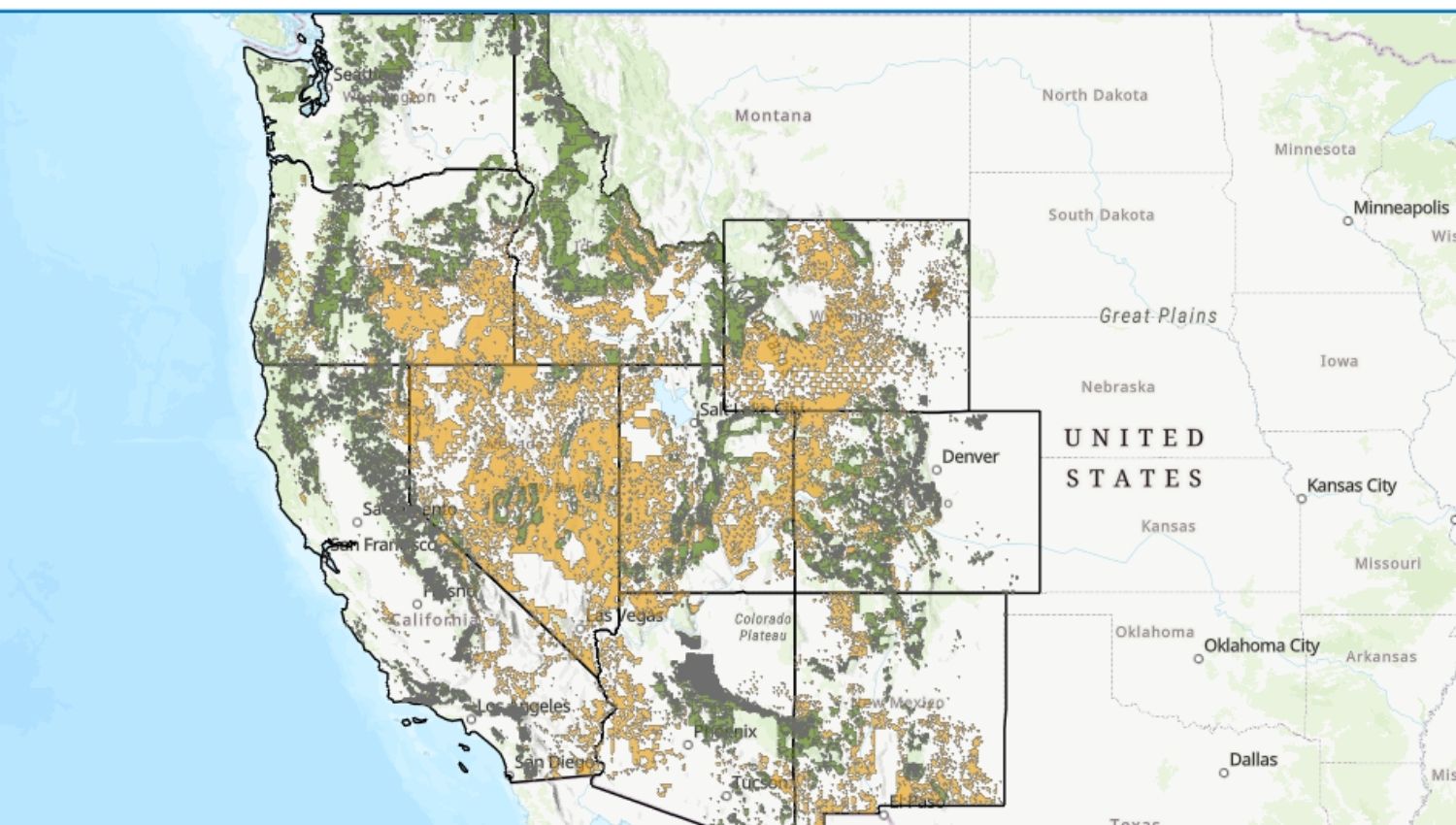
Click here for an interactive map showing land eligible for sale.
Tell Your Lawmakers to Stop the Sale.
When the Senate introduced its version of the public land sales amendment on June 11th, there was cautious optimism. We hoped it would reflect the widespread opposition to the House’s failed attempt last month by honoring the established, agency-led public land disposal process—one that includes identifying lands through Land Use Planning, conducting environmental review, gathering public input, securing congressional authorization, and directing proceeds to the Federal Land Disposal Account to support future land acquisitions.
We also hoped the Senate version would explicitly protect high-value recreation areas, require recreational easements where trails exist, and ensure lands with significant public use—especially for mountain biking and outdoor recreation—were excluded from eligibility. Early signs suggested the amendment could even help address federal land management agencies’ deferred maintenance backlogs.
Unfortunately as more details emerged, it has become clear the Senate amendment takes a different and much more dangerous approach.
“This is a massive step in the wrong direction for our federal public lands,” said Todd Keller, Director of Government Affairs at the International Mountain Bicycling Association (IMBA). “Given the recent investments in policies that support mountain biking, such as the Biking on Long Distance Trails Act and the Bonneville Shoreline Trail Advancement Act, this legislation not only threatens thousands of miles of community trails; it threatens everything the mountain bike community has accomplished over the last five years.”
This amendment launches an unprecedented attack on our public lands. It bypasses public input, ignores decades of evidence showing trails and recreation drive sustainable local economies, and mandates the sale of millions of acres to the highest bidder without safeguards for recreation and without any demonstrated need. This is a reckless, short-sighted land grab with lasting consequences for the places we ride, hike, hunt, fish and cherish.
Tell Your Lawmakers to Stop the Sale.
The amendment, written by Mike Lee (R-UT) and Steve Daines (R-MT), would require the Forest Service and the Bureau of Land Management to sell off at least 0.5% and up to 0.75%, or 3.3 million acres, of its land inventory in 11 western states. Montana is excluded. Instead of limiting sales to lands already identified for disposal, the vast majority of Forest Service and Bureau of Land Management land is on the table. While protective designations like National Parks, National Trail Systems, National Recreation Areas and Wilderness are excluded from sales, there are virtually no other safeguards on what land can be sold.
Outside of these protective designations, there is no consideration for existing trails or recreation in the bill.
The amendment outlines a process where nominations for parcels of land to sell can be submitted from “interested parties, including states and units of local government.” Land managers are required to propose parcels of land for sale every 60 days for five years, until 0.5% to 0.75% of public lands are sold.
The amendment includes criteria to prioritize housing development by selecting lands adjacent to existing development and infrastructure. Examples of eligible land that fit this criteria are the same spaces with great close-to-home trail systems like Bean Peaks in Prescott, Arizona or Lunch Loops in Grand Junction, Colorado. Sales do not require hearings or public input, only consultation with the state’s governor, applicable local governments, and applicable Native American communities. It gives governments a first right of refusal to purchase proposed lands, but not Native tribes.
An analysis from Outside Magazine Columnist Wes Siler concludes, “The bill sets up relatively under-resourced state and local governments to lose open bidding wars to well-heeled commercial interests. It also fails to give sovereign Tribal Nations the right of first refusal to bid on lands, even for areas that are a part of their traditional homelands or contain sacred sites.”
Over a nine-year period, 5% of these sales (up to $500 million total) would go toward the deferred maintenance backlogs of the Forest Service and Bureau of Land Management. As of FY2022, the backlog for the Forest Service is $7.66 billion and the Bureau of Land Management backlog is $4.77 billion. The amendment would fund, at maximum, 4% of this combined FY2022 backlog over nine years. From FY2021 to FY2022 the Forest Service backlog increased by 21% and the Bureau of Land Management backlog increased by 9%. $500 million won’t make a dent.
The America the Beautiful Act, introduced on May 1st by Senators Steve Daines (R-MT) and Angus King (I-ME), is a much more reliable and robust solution for funding deferred maintenance. It extends and preserves existing programs that have proven results, rather than relying on a small fraction of proposed sales that may or may not lead to purchases.
Within the larger spending package, the Forest Service faces budget cuts of more than 60% while the Bureau of Land Management and National Park Service budgets are reduced by more than 35%. These cuts follow February’s mass layoffs. As Outdoor Alliance put it, “This kind of budget doesn’t just trim fat—it hollows out the very capacity to steward and protect public lands for the people who use them.”
And within the amendment itself, more threats to recreation exist. It prioritizes oil, gas, and timber development on public lands with fewer protections for recreation, wildlife, and climate. It weakens National Environmental Policy Act (NEPA) reviews and allows developers to pay to skip judicial review and public input. It includes long-term timber contracts that amount to de facto privatization of public forests.
This amendment threatens our public lands on a new and unprecedented scale.
It must be stopped in its tracks and removed immediately.
Senators are pushing for a vote on the package by Thursday, June 26th. The reconciliation process allows Congress to pass legislation with only a simple majority in the Senate, bypassing the typical 60-vote threshold and limiting opportunities for public debate.
PLEASE, customize your message for greater impact: include names and locations of the trails at risk that are meaningful to you in the second paragraph of the message.