Guidelines for a Quality Trail Experience
Guidelines for a Quality Trail Experience
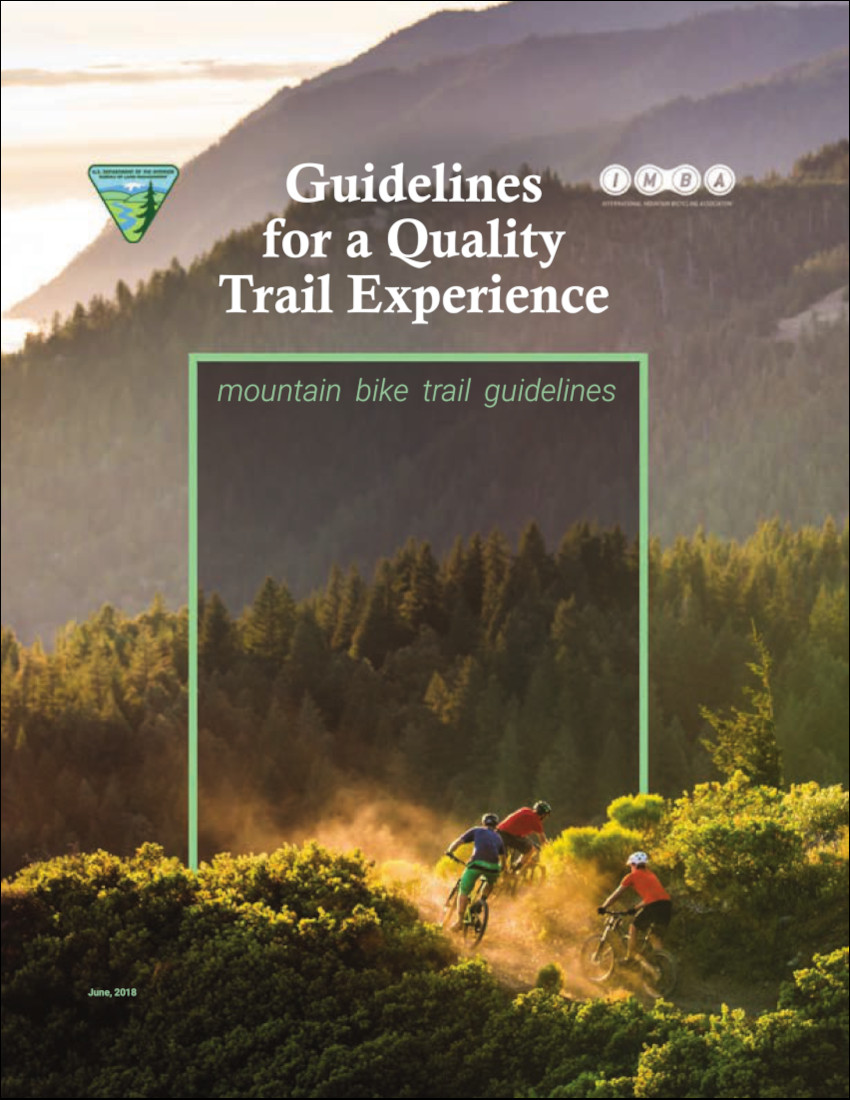
Published: 2017
Audience & Application
This book provides an in-depth look at trail experiences, focusing on mountain biking but offering principles applicable to all user needs and wants.
- Land Managers: This book provides a deep dive into understanding and implementing the principles that define a range of high-quality trail experiences. It provides a formal framework (developed in partnership with the BLM) to help set targeted trail objectives and outcomes and ensure long-term management aligns with user needs.
- Trail Builders: This book helps trail builders improve the design and construction of trails. It outlines key characteristics that define various trail experiences, ensuring that the physical design and layout of the trail meet the desired user outcomes. It is a guide to help builders create sustainable and intentioned paths.
About the Book
The Guidelines for a Quality Trail Experience (GQTE) was developed in collaboration between the Bureau of Land Management (BLM), the International Mountain Bicycling Association (IMBA), and other partners. While focused on mountain biking, the trail design principles apply to all trails.. The overarching vision for these guidelines is to establish key characteristics that will define a range of trail-based experiences. When applied properly, the trail design will form the foundation for an experience that meets the targeted trail objectives and outcomes. The GQTE documents the BLM’s evolution as a land management agency, provides internal staff and the public at large a resource to better communicate what constitutes a quality riding experience, and sets forth a process for ensuring that targeted experiences and beneficial outcomes are realized. As the quest for an extraordinary trail experience has evolved, so must the evolution of how trails are communicated, planned, designed, constructed, and managed.

